
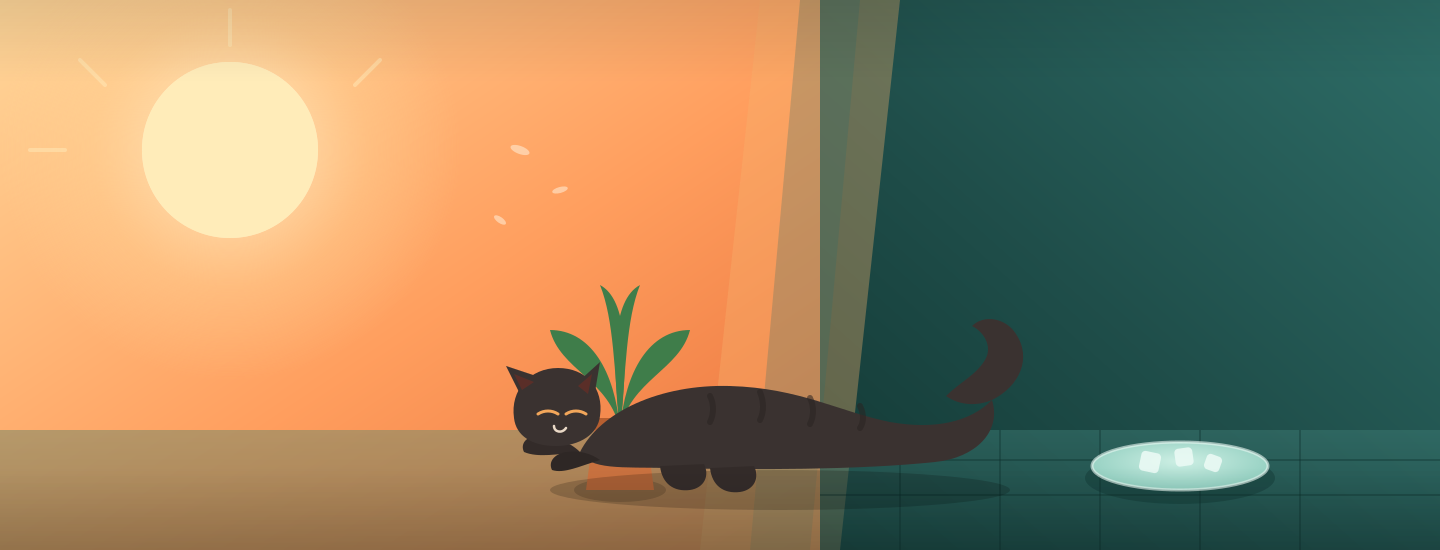
By the time you notice something wrong, your cat may already be in trouble. This guide helps you spot problems early and keep your feline companion comfortable through rising temperatures.
Why Cats Struggle More Than You Think
Cats conserve energy by sleeping through the hottest parts of the day — a natural survival strategy. But indoor cats face unique summer challenges: poor ventilation, limited access to cool surfaces, and owners who misunderstand their needs. Long-haired breeds and overweight cats are at highest risk.
1. Solving the Low-Thirst Problem
Cats evolved as desert animals with a low thirst drive. In summer, this evolutionary advantage becomes a liability. Many cats do not drink enough even when water is available.
Encouraging hydration:
- Place water bowls in multiple locations — away from litter boxes and food.
- Use wide, shallow ceramic or stainless steel bowls.
- Add ice cubes; many cats enjoy batting at them before drinking the melted water.
- Invest in a recirculating water fountain.
- Transition to wet food or add water to dry kibble.
Signs your cat is dehydrated: Lethargy, sunken eyes, dry gums, panting, and decreased skin elasticity.
2. Creating Cool Zones
Cats will find the coolest spot available — but your home may not offer enough options.
Set up cool retreats:
- Leave bathroom doors open so tile floors and porcelain tubs stay accessible.
- Place a cooling mat in your cat's favourite napping area.
- Elevate a bed off the floor for better air circulation.
- Keep a fan running on low in one room and ensure cords are inaccessible.
Never confine your cat to: Sunrooms, glass-enclosed balconies, greenhouses, or any unventilated space during summer.
3. Car Safety Applies to Cats Too
Some owners believe cats are "fine" in cars for short errands. They are not. A parked car reaches deadly temperatures within minutes. Cats cannot pant efficiently like dogs, making them even more vulnerable. Leave your cat at home.
4. Summer Grooming for Felines
Long-haired cats — Persians, Maine Coons, Ragdolls, Himalayans, and Norwegian Forest Cats — suffer significantly in summer heat. Mats trap heat and moisture against the skin, leading to overheating, fungal infections, and painful skin pulling.
Professional summer grooming for cats:
- Deshedding to remove loose undercoat, reducing heat trapping and hairballs.
- Mat removal; never attempt with household scissors.
- Sanitary trim to prevent urine or faeces from adhering in warm weather.
- Nail trim, because overgrown nails affect posture and grip on slippery summer floors.
Important warning: Do not shave your cat unless specifically advised by a veterinarian or professional groomer. A cat's coat provides essential protection against sunburn and regulates temperature.
5. Recognising Heat Stress in Cats
Cats rarely pant. If you see your cat panting like a dog, consider it an emergency.
Subtle signs of heat stress:
- Restlessness or pacing
- Excessive grooming
- Lying stretched flat on cool floors
- Rapid breathing with closed mouth
- Dark red gums
- Drooling
If you observe these signs:
- Move your cat to the coolest room in your home.
- Offer fresh, cool water.
- Dampen a towel and place it nearby; do not force contact.
- Contact your veterinarian for guidance.
6. Summer Parasite Protection
Fleas, ticks, and mosquitoes thrive in warm weather. Mosquitoes transmit heartworm disease — which is nearly 100% fatal in cats and has no approved treatment. Prevention is the only option.
Summer parasite checklist:
- Administer vet-recommended flea and tick prevention year-round.
- Apply mosquito prevention as prescribed.
- Check your cat weekly for ticks, especially if they access balconies or gardens.
- Wash bedding frequently in hot water.
7. Adjusting Play and Feeding Schedules
Cats are most active at dawn and dusk — nature's design for avoiding midday heat.
Summer schedule for cats:
- Active play sessions before 8 AM and after 7 PM.
- Quiet, restful indoor time between 11 AM and 4 PM.
- Smaller, more frequent meals.
- Wet food meals during the hottest part of the day for hydration.
Team FurNest's cat care promise: Our groomers are trained in feline behaviour and stress signals. We come to your home — so your cat never endures a hot car ride or an unfamiliar salon. From deshedding to sanitary trims, we keep your cat comfortable all summer.